High Speed Mixer Supplier: Heating Jacket and Cooling Coil for PVC Compounding Lines
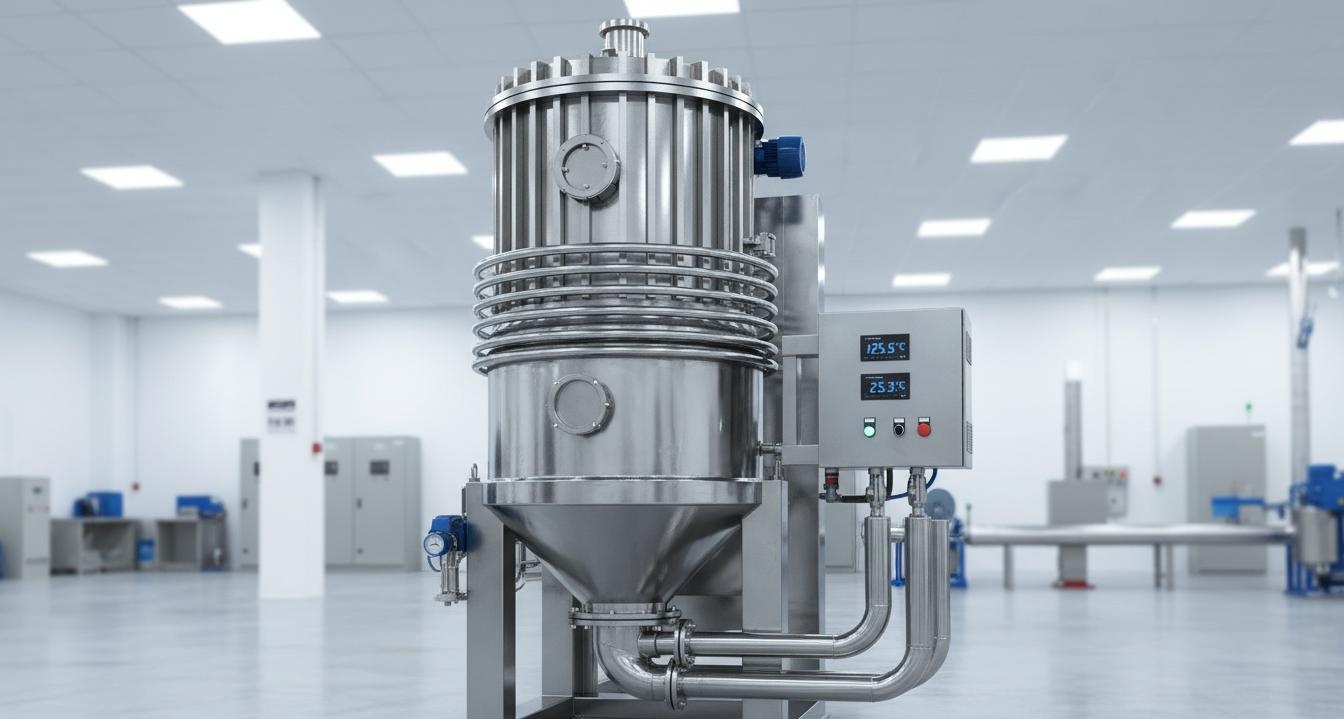
When sourcing industrial mixing equipment for PVC compounding, the difference between a standard mixer and one engineered for precision temperature control can mean the difference between production bottlenecks and seamless throughput. A high speed mixer supplier that offers integrated heating jacket and cooling coil systems represents the gold standard for processors demanding tight control over compound properties—color matching, particle size distribution, and mechanical performance all start with how well you manage exothermic heat during the mixing cycle.
This comprehensive guide walks through the technical considerations that separate premium heating jacket mixers and cooling coil mixers from commodity equipment, what specifications to evaluate when qualifying a PVC compounding mixer manufacturer, and how to match your process requirements to the right equipment configuration. Whether you are evaluating your first high speed mixer or upgrading an existing production line, understanding these thermal management fundamentals will help you make decisions that pay dividends across years of operation.
Understanding the Role of Heating Jackets in High Speed Mixers
High speed mixers used in PVC compounding operate by subjecting raw materials—polyvinyl chloride resin, plasticizers, stabilizers, fillers, and pigments—to intense mechanical agitation at tip speeds that can exceed 40 meters per second. This energy input generates significant friction heat, and without proper thermal management, the compound risks thermal degradation, discoloration, or uneven additive distribution.
A heating jacket addresses this challenge by providing indirect thermal energy to the mixing chamber walls. Unlike direct heating methods that apply open flame or electric elements directly to the compound, a heating jacket transfers heat through a controlled medium—typically thermal oil or pressurized hot water—circulating through an annular space surrounding the mixing chamber. This indirect approach delivers several decisive advantages for PVC compounding:
- Precise temperature control within ±2°C across the chamber wall surface, enabling reproducible compound quality batch after batch. When your heating jacket can hold this tolerance across a 500-liter mixing chamber, your process window becomes predictable and defensible.
- Uniform heat distribution that eliminates hot spots which could cause localized resin fusion or additive charring. Direct heating creates thermal gradients within the compound—regions closer to heating elements receive more energy, generating localized temperature spikes that cascade into quality problems.
- Energy efficiency gains of 15–30% compared to direct heating systems, since heat transfer occurs through a controlled medium rather than open combustion. Across a full production year, these efficiency gains translate to operational cost reductions that compound—many processors find that energy savings alone justify the investment in premium heating jacket equipment within 18–24 months.
- Reduced maintenance requirements—no exposed heating elements subject to compound contamination or mechanical wear. Exposed elements in direct heating systems face chemical attack from compound volatiles and mechanical stress from thermal cycling, accelerating failure and risking contamination events if element sheaths fail.
When evaluating a high speed mixer supplier, the heating jacket design deserves careful scrutiny. Look for jacket configurations that maximize heat transfer surface area, incorporate multi-zone temperature monitoring, and allow for independent control of jacket temperature relative to the compound’s internal temperature. A properly designed heating jacket should respond to temperature setpoint changes within 5 minutes during normal operation, not the 20–30 minute lag times characteristic of undersized or poorly designed systems.
Cooling Coil Systems: Managing Exothermic Reactions in PVC Compounding
Where heating jackets handle controlled warm-up and temperature maintenance, cooling coils manage the exothermic heat generated during high-intensity mixing phases. In PVC compounding, the incorporation of liquid plasticizers and the friction-driven shearing action both generate substantial heat loads that must be dissipated to prevent temperature spikes that compromise compound quality.
Cooling coil design in high speed mixers typically takes one of two approaches:
- Internal cooling coils: Helically wound tubes positioned within the mixing chamber, directly contacting the compound. These offer rapid heat removal but require careful material selection to resist corrosion from chloride compounds and mechanical stress from high-speed agitator motion. The direct contact approach enables heat flux rates of 50–80 kW/m², allowing processors to reduce batch cooling times by 25–40% compared to jacket-only cooling configurations.
- Jacket-based cooling: The same annular space used for heating can be reconfigured for cooling by circulating chilled water or glycol solutions through the jacket. This approach sacrifices some heat transfer speed for greatly improved reliability and maintenance accessibility. Heat flux rates of 15–30 kW/m² are typical, but the elimination of internal components in direct compound contact removes leakage risk and simplifies maintenance.
For PVC compounding applications where cycle time is a critical metric, internal cooling coils often deliver the performance advantage. Every minute saved per batch compounds across high-volume production schedules—this cycle time advantage represents substantial throughput gains without additional equipment investment.
When qualifying a cooling coil mixer from any high speed mixer manufacturer, ask about coil material composition and surface treatment. Stainless steel 304 is adequate for standard PVC compounds, but formulations containing aggressive stabilizers or chloride-containing additives may require stainless steel 316L or specialized coatings to prevent pitting corrosion that compromises cooling efficiency over time.
Key Specifications to Evaluate When Selecting a PVC Compounding Mixer Manufacturer
Beyond heating jacket and cooling coil capabilities, several equipment specifications determine whether a high speed mixer supplier can meet your production requirements:
Mixing Chamber Capacity and Geometry
Batch sizes typically range from 50 liters for laboratory or small-scale production up to 1,000 liters or more for high-volume compounding operations. Chamber geometry—the ratio of chamber diameter to depth and the configuration of internal baffles—affects how uniformly the compound experiences mechanical shear and thermal exchange. Properly designed chambers maintain consistent shear rates regardless of fill level, preventing quality variations between full and partial batches.
Agitator Design and Tip Speed
High speed mixers for PVC compounding generally employ rotor-stator configurations or multi-blade designs that generate tip speeds between 25 and 50 m/s. Higher tip speeds improve mixing intensity and reduce cycle times but increase power consumption and wear rates proportionally. Variable frequency drives allow operators to optimize tip speed for different formulation stages, reducing energy waste during lower-intensity phases.
Temperature Monitoring and Control
Look for systems that provide real-time compound temperature measurement through embedded thermocouples, not just jacket temperature monitoring. The compound temperature is what determines whether your process is within specification—jacket temperature is merely a means to influence it. Advanced control systems offer PID algorithms specifically tuned for the thermal dynamics of PVC compounding, compensating for the lag between jacket temperature changes and compound temperature response.
Power Consumption and Efficiency
Premium high speed mixers from established manufacturers achieve energy efficiencies 20–35% better than older or budget equipment through optimized agitator geometry, variable frequency drives, and intelligent thermal management. Over a year of production, the energy cost difference between efficient and inefficient equipment can easily exceed the initial purchase price differential.
Cleaning and Material Changeover
PVC color changeovers require thorough cleaning of mixing chambers, agitators, and feeding systems. Equipment designed for CIP (clean-in-place) capability significantly reduces changeover time and labor—look for removable baffles, polished chamber interiors (Ra ≤ 0.8 μm), and quick-release feeding components.
The Relationship Between Temperature Control and PVC Compound Quality
Precision temperature management directly influences the final properties of PVC compounds. When compound temperature exceeds specification during mixing, several quality issues emerge:
- Thermal degradation of stabilizer packages, leading to premature yellowing and reduced long-term stability. Stabilizer capacity is consumed faster than the compounding cycle completes when temperatures spike, leaving insufficient protection for storage and end-use. Compounds processed at excessive temperature pass initial quality tests but degrade prematurely in the field.
- Uneven plasticizer absorption, causing surface defects and inconsistent mechanical properties. Regions of compound that reach higher temperatures achieve complete plasticizer incorporation while cooler regions remain partially absorbed, creating property variations within a single batch that manifest as quality failures in finished parts.
- Filler agglomeration at elevated temperatures, reducing the effectiveness of reinforcement and affecting impact resistance. High temperatures soften the PVC matrix and increase particle-particle contact time, promoting particle bonding that persists through subsequent processing steps. Agglomerates create stress concentration points that reduce mechanical performance.
- Color drift in pigmented compounds, particularly problematic for applications requiring tight color matching across multiple production batches. Temperature affects pigment particle morphology and polymer-pigment interactions, causing batch-to-batch color variation that customers find unacceptable in automotive, consumer products, and construction applications.
A properly configured heating jacket and cooling coil system addresses these concerns by maintaining compound temperatures within ±3°C throughout the mixing cycle, even during high-shear phases that generate significant friction heat. This thermal stability enables processors to develop tighter process windows and achieve more consistent product quality batch after batch.
Material Selection for Mixing Chamber Construction
The mixing chamber materials in a high speed mixer influence both thermal transfer efficiency and compound contamination risk. For PVC compounding applications, stainless steel 304 remains the most common choice for its combination of thermal conductivity (approximately 16 W/m·K), corrosion resistance, and cost-effectiveness.
For more demanding applications—high-temperature formulations, aggressive additive packages, or production of medical or food-contact PVC compounds—stainless steel 316L offers improved corrosion resistance through elevated molybdenum content, though at a 15–25% cost premium. The premium is often justified when equipment longevity and compound purity are priorities.
Surface finish quality affects both cleaning efficiency and compound release characteristics. Electropolished interiors with Ra values below 0.8 μm minimize product adhesion and bacterial harboring, while rougher surfaces increase friction and reduce heat transfer efficiency. A high speed mixer supplier that specifies electropolished chambers as standard rather than optional generally demonstrates higher process engineering sophistication.
Reducing Cycle Time Through Integrated Thermal Management
Cycle time reduction represents one of the most compelling economic arguments for investing in premium heating jacket and cooling coil systems. Across a typical PVC compounding operation running 8-hour shifts, a 3-minute reduction in batch cycle time translates to approximately 160 additional batches per month—production capacity gains achieved without additional equipment investment.
Integrated thermal management enables cycle time reduction through several mechanisms:
- Rapid controlled heating during initial charge and blend phases reduces warm-up time by applying maximum safe heat flux when the compound is cold, then transitioning to precise temperature maintenance once the target temperature is reached.
- Efficient heat removal during high-shear mixing phases prevents the temperature spikes that would otherwise force operators to slow agitator speed or extend mixing time to allow cooling. Premium cooling systems remove heat faster than it is generated, maintaining process temperature even at peak shear intensity.
- Quick jacket temperature transitions between heating and cooling modes eliminate the dead time that occurs when switching modes. Properly designed systems accomplish this transition in 2–5 minutes; poorly designed systems require 10–20 minutes, creating schedule unpredictability.
- Precise temperature overshoot prevention eliminates the conservative process windows that operators must maintain when temperature control is imprecise. When the control system can reliably hold temperature within ±2°C, there is no need to operate below the optimal temperature to avoid overshoot risk.
When evaluating a PVC compounding mixer manufacturer, ask for documented cycle time comparisons between their equipment and competitor offerings. Manufacturers confident in their thermal management engineering typically provide performance data demonstrating cycle time advantages under standardized test conditions.
Maintenance Considerations and Equipment Longevity
Heating jackets and cooling coils operate under demanding conditions—thermal cycling, pressure variations, and chemical exposure—that accelerate wear over time. A high speed mixer supplier that designs for maintainability helps protect your production uptime:
- Modular jacket construction allows thermal media manifold replacement without full mixer disassembly. Premium designs incorporate isolation valves that enable system servicing without draining the entire jacket circuit, reducing maintenance time from days to hours.
- Cooling coil designs that permit removal and inspection without cutting or welding dramatically reduce maintenance costs and equipment downtime. Coil assemblies that can be withdrawn from the mixing chamber allow detailed inspection, cleaning, and repair without destroying the coil or damaging the chamber.
- Seal and gasket specifications that account for thermal expansion differentials during operation prevent the premature failures that plague standard seals in thermal cycling applications.
Ask potential suppliers about mean time between failures for heating and cooling system components, and request documentation of recommended maintenance intervals. Equipment with well-documented maintenance requirements typically demonstrates longer service life than equipment marketed as “maintenance-free”—the latter often hides design compromises that increase long-term operating costs.
Working with a High Speed Mixer Supplier: What to Expect During Qualification
Reputable high speed mixer manufacturers approach customer qualification as a technical partnership rather than a transactional sale. Expect the following from a qualified PVC compounding mixer supplier:
- Process review: Technical representatives should examine your formulation, production volumes, quality specifications, and facility constraints before recommending equipment configurations. A supplier who recommends standard equipment without understanding your specific application is selling product, not solving problems.
- Test capabilities: Look for suppliers with laboratory-scale mixing equipment available for process development trials. Running your formulation on supplier equipment before purchase commitment dramatically reduces qualification risk—it validates that the equipment can meet your process requirements before capital commitment.
- Documentation packages: Quality-focused suppliers provide comprehensive documentation including equipment specifications, installation requirements, operational procedures, and maintenance schedules in advance of purchase.
- Warranty and support: Premium equipment typically carries minimum 2-year warranties on mechanical components and 1-year on thermal control systems, backed by technical support response times of 24–48 hours for critical issues.
- Spare parts availability: Confirm that critical wear components—agitator blades, bearing assemblies, sealing elements—have documented lead times and that the supplier maintains inventory or can provide emergency sourcing within your production window tolerance.
Evaluating High Speed Mixer Manufacturers: Beyond Specification Sheets
Specification sheets tell you what equipment can do in ideal conditions. Real-world performance depends on how well the equipment integrates with your specific formulation, production schedule, and operator capabilities.
A high speed mixer supplier worth your consideration should demonstrate:
- Thorough understanding of PVC compounding thermal dynamics, not just general mixing principles. The exothermic behavior of plasticizer incorporation and the temperature sensitivity of stabilizer chemistry require specialized knowledge that general-purpose equipment suppliers often lack.
- Willingness to share references from processors running similar formulations and production volumes. Speaking with existing customers reveals equipment performance under real production conditions, supplier responsiveness to problems, and long-term satisfaction with equipment investment.
- Flexibility in equipment configuration to match your facility constraints rather than requiring facility modification. This includes unusual floor plan configurations, non-standard connection orientations, and custom control system integrations.
- Long-term parts and support commitment beyond the initial warranty period. Equipment purchases are long-term commitments; the supplier relationship should be equally long-term.
ROBOT (Ningbo) Intelligent Technology Co., Ltd. has specialized in plastic injection molding automation equipment since 2004, with expertise spanning from hopper dryers and auto loaders to servo robot arms, central conveying systems, and turnkey plant planning. Our approach to high speed mixing equipment reflects the same field-proven practical focus we bring to every product line—designs that perform reliably on the production floor, not just under laboratory conditions.
For processors evaluating heating jacket and cooling coil systems for PVC compounding applications, we recommend beginning with a detailed process requirements review. Understanding your formulation’s specific thermal profile, production volume targets, and quality specifications enables us to configure equipment that delivers measurable advantages in cycle time, energy efficiency, and compound consistency.
Explore our full range of mixing equipment and technical resources at https://www.cn-nbt.com/, or download our detailed product specifications from https://www.cn-nbt.com/uploads/ROBOT-2023.pdf.
About the Author
Mr. Chen — Technical Director, ROBOT (Ningbo) Intelligent Technology Co., Ltd.
Mr. Chen — Technical Director, ROBOT (Ningbo) Intelligent Technology Co., Ltd. ROBOT (Ningbo) was established in 2004, specializing in plastic injection molding automation equipment. From hopper dryers and auto loaders to servo robot arms, central conveying systems, and turnkey plant planning, we help factories worldwide improve efficiency with practical, field-proven solutions. As Technical Director, I focus on the real-world performance of automation equipment—cycle time, uptime, and the specifications that actually matter on the production floor.