Expert Advice for Maintaining and Cleaning Chiller Machines
Every Chiller Machine needs regular care to run smoothly. An Industrial Water Chiller can lose efficiency fast if ignored. They often see dirt build up, or face water issues. Water Cooling Chiller owners notice better cooling with simple checks. Even a Screw Chiller works longer with routine cleaning and attention.
Key Takeaways
- Regular daily, monthly, and annual maintenance keeps chiller machines running efficiently and prevents costly breakdowns.
- Following manufacturer guidelines and keeping detailed records protects your machine and extends its lifespan.
- Clean coils, proper water treatment, and monitoring operating conditions save energy, improve cooling, and reduce repair costs.
Chiller Machine Maintenance Essentials
Key Steps for Daily, Monthly, and Annual Care
Taking care of a Chiller Machine means sticking to a regular schedule. Each day, month, and year brings its own set of tasks. These steps help keep the machine running well and prevent big problems later.
Daily Care:
- Log important numbers like pressure, temperature, and fluid levels. This helps spot trouble early.
- Check water inlets and outlets for leaks.
- Listen for odd noises or vibrations from the compressor.
- Look for signs of oil leaks or changes in oil levels.
Monthly and Quarterly Care:
- Clean and inspect electrical contacts. Replace any dirty or faulty filter dryers.
- Inspect air filters and change them if they look dirty.
- Check refrigerant levels and look for leaks.
- Clean chiller tubes every few months to stop corrosion and scaling.
Annual Care:
- Deep clean heat exchangers and tubing to keep heat transfer strong.
- Treat condenser water loops to remove dirt and keep the system efficient.
- Analyze compressor oil and change it if needed.
- Do a full inspection of all parts, including safety controls and structural supports.
Tip: In summer, clean coils more often and check fan efficiency. In winter, keep glycol levels right and watch for airflow blockages.
A regular routine like this keeps the Chiller Machine in top shape and helps avoid costly repairs.
Following Manufacturer Recommendations
Manufacturers know their machines best. They give clear steps for keeping each Chiller Machine working well. Following these guidelines protects the machine and keeps the warranty valid.
- Keep detailed records of every maintenance task. This helps with warranty claims and makes sure nothing gets missed.
- Use the manufacturer’s testing steps to set a baseline for how the machine should perform.
- Clean condenser coils with the right pressure and safe chemicals, as the manual suggests.
- Always use filtered and treated water in the cooling system. This stops scale, corrosion, and biological growth.
- Clean all parts, including air filters and condenser fans, on a regular schedule.
- Document every check and cleaning. If something goes wrong, these records help prove the machine was cared for.
Manufacturers also recommend regular chemical analysis of oil and refrigerant. This helps spot problems before they get worse. By sticking to these steps, owners can keep their Chiller Machine running smoothly for years.
Why Chiller Machine Maintenance and Cleaning Matter
Performance and Efficiency Benefits
Regular maintenance and cleaning help a Chiller Machine work at its best. When tubes stay clean and refrigerant levels stay right, the system cools faster and uses less energy. Studies show that simple tasks like cleaning coils and checking controls can boost airflow by up to 46% and cut fan energy use by as much as 60%.
Here’s a quick look at the numbers:
| Metric | Range / Result |
|---|---|
| Fan Energy Savings | 41% to 60% reduction |
| Airflow Improvement | 10% to 46% increase |
Schools that follow a maintenance plan have seen energy bills drop by half. Clean systems also help the environment by lowering carbon emissions. When a Chiller Machine runs smoothly, everyone saves money and energy.
Preventing Costly Breakdowns
Nobody likes surprise repairs. Routine checks catch small problems before they turn into big ones. For example, checking for leaks, cleaning coils, and testing motors can stop breakdowns that would cost a lot to fix. Many schools and businesses have found that regular maintenance means fewer emergencies and less downtime.
Early detection of issues keeps the system running and avoids expensive repairs.
Extending Equipment Lifespan
Taking care of a Chiller Machine helps it last longer. Regular cleaning, oil changes, and inspections keep all parts working well. Technicians who check the system each year can spot wear and tear before it causes trouble. This means the machine stays reliable for many years, and owners don’t have to buy new equipment as often.
A well-maintained system is a smart investment for any business.
Daily Chiller Machine Maintenance
Visual Inspections and Debris Removal
A daily visual check helps spot problems before they get worse. Technicians look for leaks, loose parts, and signs of corrosion. They also remove any dirt or debris that could block airflow or water flow. Here are some important steps:
- Inspect all equipment to make sure it works and safety features are in place.
- Check for leaks in pipes and look for oil, refrigerant, or water spills.
- Listen for strange sounds or vibrations.
- Tighten any loose bolts or fasteners.
- Look for rust, especially on pipes and coils.
- Check for dirt or buildup on chiller parts.
- Inspect electrical parts like relays and wiring.
- Test safety devices.
- Check filters, valves, and pressure vessels.
- See if oil, refrigerant, or water needs to be replaced.
These steps help keep the Chiller Machine clean and safe. Removing debris and checking for damage can stop bigger problems from happening.
Monitoring Operating Parameters and Logs
Daily monitoring of operating numbers gives a clear picture of how the system runs. Technicians record temperatures, pressures, and refrigerant levels. This information helps spot changes early. Many companies use smart tools to track these numbers all day. Keeping a log helps find trends and shows if something starts to go wrong. It also helps meet safety rules and keeps everyone honest about maintenance. When teams keep good records, they can fix small issues before they turn into big repairs.
Checking for Unusual Noises or Vibrations
Strange noises or shaking often mean trouble. When technicians hear odd sounds, they act fast. In one data center, fixing noise problems saved over £100,000 and kept the cooling strong. Another building used special fan controls to cut noise by 95% and made the system more efficient. Quick action on noise and vibration keeps the Chiller Machine running well and avoids costly fixes. Listening every day helps catch problems early.
Monthly Chiller Machine Cleaning and Checks
Cleaning Condenser and Evaporator Coils
Monthly coil cleaning keeps the system running smoothly. Dirt, mud, and algae can build up on coils, making it harder for the machine to release heat. When coils stay dirty, the system works harder and uses more energy. Studies show that regular coil cleaning can improve energy efficiency by 10-15%. Some buildings have saved thousands of dollars each year just by keeping coils clean. A clean coil also helps the system last longer and keeps the air fresh.
Tip: Use the right cleaning tools and follow the manufacturer’s instructions for best results.
| Problem from Dirty Coils | Impact on System |
|---|---|
| Cooling capacity drops | Up to 40% less cooling |
| Compressor power increases | Up to 70% more energy used |
| Air temperature rises | About 5°F higher |
Inspecting and Replacing Air Filters
Air filters catch dust and debris before they reach the coils. Over time, filters get clogged and block airflow. Monthly checks help spot dirty filters early. Replacing them keeps the system breathing easy and stops dirt from reaching other parts. Clean filters also help keep the air inside the building healthy.
Note: Mark the date when changing filters to keep a good schedule.
Checking Refrigerant Levels and Leaks
Refrigerant keeps the system cool. If the level drops or leaks out, the system loses efficiency and uses more power. Monthly checks help spot leaks before they cause big problems. Technicians look at pressure readings and temperatures to make sure everything stays in the right range. Research shows that even small leaks can raise energy costs and damage the system.
- Regular checks help catch leaks early.
- Stable refrigerant levels mean better cooling and lower bills.
Inspecting Electrical Components
Electrical parts need attention, too. Wires, switches, and controls can wear out or come loose. Monthly inspections help find problems before they cause breakdowns. Tightening connections and cleaning parts keeps everything safe and efficient. These checks also help meet safety rules and keep the system running longer.
- Inspections prevent overheating and wasted energy.
- Good records help with warranty claims and track system health.
Annual Chiller Machine Maintenance Procedures
Deep Cleaning of Heat Exchangers and Tubing
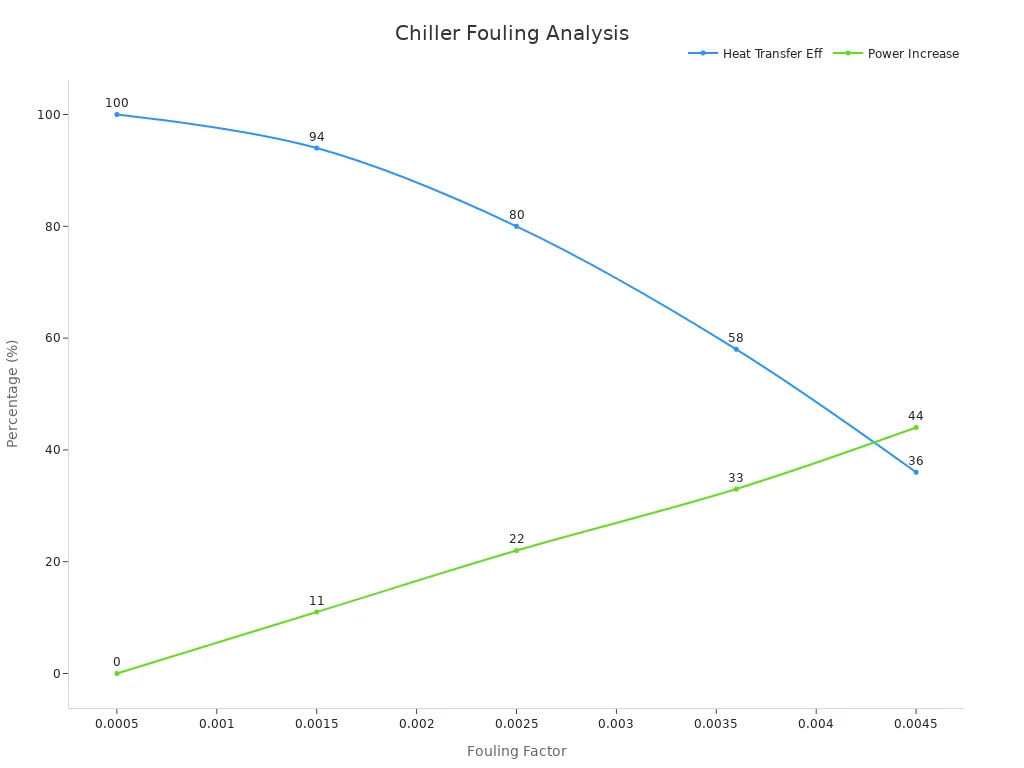
Deep cleaning heat exchangers and tubing keeps the system running strong. Over time, dirt and scale build up inside the tubes. This buildup blocks heat transfer and makes the machine work harder. At the Hapuna Beach Prince Hotel in Hawaii, an automatic tube cleaning system removed fouling every few hours. The hotel saw energy savings between 10% and 35%, and the system paid for itself in less than a year.
Choosing the right cleaning method matters. For example, rotary tube cleaners work well on hard scale, while online systems clean continuously but cost more at first. The type of tube and deposit will guide the best tool for the job.
Flushing and Treating Water Systems
Water quality affects how well the chiller works. If water contains minerals or dirt, it can leave deposits inside the system. These deposits raise temperatures and force the machine to use more energy. Regular flushing and chemical treatment remove scale and stop algae from growing. Most experts suggest testing water every few months and adjusting treatment as needed. Clean water helps the system last longer and cool better.
Lubricating Moving Parts
Moving parts like bearings and motors need regular lubrication. Lubrication reduces friction and stops parts from wearing out too soon. When technicians keep these parts oiled, the system runs smoother and uses less energy. Lubrication also lowers the chance of sudden breakdowns. By checking and applying lubricant as the manufacturer recommends, teams help the equipment last longer.
Comprehensive System Inspection
A full inspection checks every part of the system. Technicians look at refrigerant and oil levels, test controls, and measure temperatures and pressures. They also check for leaks, listen for odd noises, and make sure all safety devices work.
A detailed inspection helps spot small problems before they grow.
This process keeps the system safe and efficient. It also helps teams plan repairs before something breaks.
Chiller Machine Water Quality Management
Importance of Water Treatment and Glycol Mixture
Water quality plays a huge role in how well a cooling system works. When water contains too many minerals like calcium or magnesium, it can leave behind hard deposits. These deposits, called scale, block water flow and make the machine work harder. If the water is too soft, it can cause metal parts to rust. The pH level matters, too. Water that is too acidic or too basic can damage pipes and other parts. Microbes in the water can also cause problems. They can form slime, which clogs tubes and lowers efficiency.
A good water treatment plan keeps these problems away. Many systems use a mix of water and glycol. Glycol helps prevent freezing and protects against corrosion. Regular testing of water for minerals, pH, and microbes helps keep everything running smoothly. Clean water means better cooling, lower energy bills, and longer equipment life.
Monitoring for Scale, Corrosion, and Biological Growth
Keeping an eye on scale, corrosion, and biological growth is key for any cooling system. Scale forms when minerals build up inside pipes and tubes. This buildup makes it harder for the system to move heat, so it uses more energy. Corrosion happens when water eats away at metal parts. This can cause leaks and even system failure. Microbial growth, like algae or bacteria, can create slime that blocks water flow.
Experts recommend a few simple steps:
- Keep a daily log of temperatures, pressures, and water flow. This helps spot changes early.
- Clean condenser and evaporator tubes often to stop fouling from scale or microbes.
- Watch water flow speed. A flow between 3 and 11 feet per second helps prevent buildup.
- Use the right chemicals to treat water. This stops scale, rust, and biological growth.
Tip: Regular checks and water treatment keep the system efficient and help avoid costly repairs.
Troubleshooting Chiller Machine Issues
Addressing Temperature Fluctuations
Temperature swings can signal deeper problems. Operators often start by checking if the system runs in the right sequence. Research shows that restoring proper chiller sequencing and using the best design for multiple chillers can cut energy use by over 26%. Many teams use variable-speed drives (VFDs) to control compressor and fan speeds. This helps the system adjust to changing loads and keeps temperatures steady.
Here’s a quick look at some helpful techniques:
| Approach/Technique | Description | Impact/Benefit |
|---|---|---|
| VFDs for compressors and fans | Adjust speeds for precise cooling | Better efficiency, stable temps |
| Optimized setpoint controls | Change settings based on real-time data | Lower energy use, quick response |
| Data-driven models | Use smart tools to predict and fix issues | Fewer surprises, more control |
Operators also use advanced models that blend real-world knowledge with machine learning. These tools help spot problems early and keep the system running smoothly.
Dealing with Unusual Noises
Strange sounds often mean trouble. Operators listen for rattling, hissing, or grinding. These noises can point to electrical issues, pump failures, or airflow blocks. Routine inspections help catch these problems before they get worse. Many teams use Computerized Maintenance Management Systems (CMMS) to track and schedule checks.
Tip: CMMS tools give real-time updates and help teams fix issues fast.
If a technician hears a new noise, they check for loose parts, worn bearings, or blocked fans. Quick action keeps the system safe and avoids bigger repairs.
Resolving Low Efficiency
Low efficiency wastes energy and money. Case studies show that data analytics can spot the root cause. For example, one team found a 40% efficiency gap between two chillers. They fixed a broken part and restored performance. Another team used Particle Swarm Optimization to balance loads and save energy.
Common fixes include:
- Checking for low refrigerant or faulty controls
- Repairing broken actuators or boards
- Using smart algorithms to optimize load sharing
Routine data review and teamwork help keep efficiency high. Advanced optimization methods, like Genetic Algorithms and Flower Pollination Algorithm, have cut energy use by up to 27%. These tools help operators get the most from their equipment.
Chiller Machine Preventive Maintenance Checklist
Key Items to Review Regularly
A good preventive maintenance checklist helps teams catch problems early and keep the system running smoothly. Many experts recommend reviewing these items on a regular basis:
- Perform vibration analysis on motors and compressors. This step helps spot mechanical issues before they get worse.
- Test all safety systems, including alarms and interlocks. These checks prevent unsafe conditions.
- Keep detailed maintenance logs. Record flow rates, temperatures, pressures, and fluid levels every day.
- Use remote monitoring systems for real-time updates and automated reports.
- Clean condenser and evaporator coils to keep heat transfer strong.
- Lubricate moving parts like bearings and fans to reduce friction.
- Check and maintain refrigerant levels for the best cooling.
- Inspect electrical components, controls, and sensors to avoid failures.
- Test water quality and add chemical treatments to stop scale and corrosion.
- Calibrate temperature and pressure controls each season.
- Inspect insulation and seals to prevent leaks and heat loss.
- Analyze compressor oil to find contamination and plan oil changes.
Tip: Teams that follow this checklist see fewer breakdowns and longer equipment life.
Scheduling Professional Inspections
Professional inspections add another layer of safety. Trained technicians use special tools to check for hidden problems. They often find issues that daily checks might miss. Most experts suggest scheduling a full inspection at least once a year. Some facilities choose to do this before peak cooling seasons. A professional can also help calibrate controls, test water quality, and review maintenance logs. Regular inspections keep the system safe, efficient, and ready for any challenge.
Regular maintenance keeps equipment running smoothly and saves money. Teams who follow these steps see fewer breakdowns and better performance. Want the best results? They should call a professional for tough jobs or technical repairs. Staying on top of care helps everyone get the most from their cooling system.
FAQ
How often should someone clean a chiller machine?
Most experts suggest cleaning coils and filters every month. Annual deep cleaning keeps the system running well. Daily checks help spot problems early.
What signs show a chiller needs maintenance?
Unusual noises, higher energy bills, or weak cooling often mean trouble. Leaks or strange smells also signal the need for a checkup.
Can anyone perform chiller maintenance, or should a professional do it?
Basic tasks like cleaning filters are easy for most people. For technical repairs or inspections, a trained technician should handle the job.